Full Service CRO: Benefits, Costs, and How to Choose the Right Partner
Clinical trials are not just complex — they are high-risk, time-sensitive investments where delays can cost millions. Choosing the right CRO model is no longer an operational decision, but a strategic one. For many sponsors, the question is not whether to outsource, but whether a full service CRO is the right partner to deliver speed, quality, and control.
What Is a Full Service CRO — And Why It Matters
Running a clinical trial is a complex undertaking that requires careful coordination across multiple domains — from study design and regulatory compliance to site management and data handling. Full-service CROs streamline this process by taking full ownership of each stage, allowing biotech and pharma sponsors to focus on scientific innovation rather than operational burdens.
Unlike niche providers that focus on just one part of a clinical trial, full-scale CRO partners offer all key services in one place. This includes early planning, protocol development, regulatory support, patient recruitment, monitoring, and data analysis. Having everything under one roof helps keep the trial consistent, on schedule, and high in quality from start to finish.
What Services Does a Full Service CRO Provide?
Most full service CROs provide end-to-end support across the entire clinical development lifecycle, including:
- Study design and protocol development
- Regulatory strategy and submissions
- Site identification and activation
- Patient recruitment and retention
- Clinical monitoring
- Data management
- Biostatistics
- Medical writing
- Pharmacovigilance
- Clinical trial rescue services
For sponsors, this means working with a single partner that assumes responsibility for study execution from startup through final reporting.

By serving as a single point of accountability, complete-service CRO eliminate the need to coordinate multiple vendors — simplifying communication and ensuring alignment across all trial functions. This integrated approach not only enhances efficiency but also minimizes risk and shortens development timelines. In a landscape where every month matters, comprehensive CROs have become the go-to solution for sponsors aiming to bring new therapies to market faster and more reliably.
Benefits of Working With a Full Service CRO
For many sponsors, the primary advantage of working with a full service CRO is simplicity. Rather than managing multiple vendors across different functions, sponsors can rely on a single partner responsible for study execution from startup through database lock.
Key benefits of a full service CRO include:
A single point of accountability across all trial activities
Faster study startup and operational execution
Reduced vendor management burden
Improved communication and decision-making
Consistent quality oversight across regions and sites
Better integration of clinical, regulatory, and data functions
More predictable timelines and budgets
As clinical trials become increasingly complex, many sponsors view full service CROs not only as service providers but as strategic partners capable of accelerating development programs and reducing operational risk.
How to Choose a Full Service CRO
When evaluating a full service CRO, sponsors should focus on five critical factors:
- Therapeutic expertise: Does the CRO have proven experience in your indication (oncology, rare diseases, CNS)?
Given how central oncology remains to CRO strategy, sponsors evaluating a full-service partner should also review our guide on selecting the right oncology CRO for complex cancer trials
- Geographic footprint: Can they operate in regions with fast recruitment and regulatory efficiency?
- Patient recruitment capabilities: Do they have real-world strategies to deliver enrollment on time?
- Pricing model: Does the CRO offer flexible or risk-sharing models?
- Data and biometrics strength: Can they ensure high-quality data and regulatory readiness?
Why Sponsors Choose Full Service CROs
In today’s fast-paced clinical research environment, sponsors increasingly favor full-service CROs over other models. In 2024, 62.2 % of CRO engagements were full-service, compared to a growing but lesser share for FSP or hybrid arrangements. This growing preference reflects a broader shift: sponsors increasingly view end-to-end CROs as strategic enablers, not just operational vendors.
Here’s what drives that choice:
- End-to-end accountability: A single partner overseeing every stage of the trial reduces vendor handoffs, gaps, and risk.
- Streamlined execution: Integrated project management accelerates timelines, from study startup to final submission.
- Therapeutic and regulatory expertise: Especially critical in areas like oncology, rare diseases, and advanced therapies, where specialized insight is essential.
- Global infrastructure with local presence: Full-support CRO bring established networks in high-recruitment regions such as Eastern Europe and Asia-Pacific, combining global standards with regional agility.
As trials grow more complex and time-sensitive, full service partnerships are no longer just efficient — they’re strategic.
FSP vs Full Service CRO: Finding the Right Fit
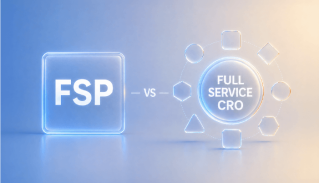
Today’s sponsors often choose between two models: Functional Service Providers (FSPs), which deliver support for specific trial functions, and full-service CROs, which manage the entire clinical development process from start to finish. FSPs are ideal for sponsors who want to retain control over certain aspects of a trial while scaling others.
All-in-one CRO, on the other hand, offer an integrated, end-to-end approach — reducing handoffs, improving timelines, and ensuring consistency. This makes them especially attractive to small and mid-sized biotechs or sponsors running complex, multi-country trials.
| Feature | Full Service CRO | FSP (Functional Service Provider) |
|---|---|---|
| Scope | End-to-end trial management | Specific functions only |
| Control | CRO-led execution | Sponsor retains control |
| Speed | Faster due to integration | Slower due to coordination |
| Complexity | High (multi-country trials) | Limited |
| Cost structure | Higher upfront, fewer hidden costs | Lower upfront, higher coordination cost |
| Best for | Biotech, complex trials | Large pharma |

Ultimately, the choice depends on the sponsor’s internal resources, timelines, and trial scope. But as trials become more complex and time-sensitive, the operational cohesion offered by full-capability CRO is proving increasingly valuable.
Sponsors with strong internal infrastructure may benefit from an FSP clinical research model, which allows specific functions to be outsourced while maintaining direct oversight of systems and processes.
When Should Sponsors Choose a Full Service CRO?
While both outsourcing models can be effective, there are situations where a full service CRO is often the preferred option.
Sponsors are more likely to benefit from a full service CRO when:
Running multi-country or global clinical trials
Facing aggressive development timelines
Operating with limited internal clinical operations resources
Managing complex protocols that require close cross-functional coordination
Experiencing patient recruitment challenges
Seeking a single partner responsible for study delivery
In these scenarios, a full service CRO can reduce operational complexity, improve communication, and provide greater accountability across the entire clinical development process.
For emerging biotech companies in particular, a full service CRO often provides access to experienced teams, established systems, and proven operational infrastructure without the need to build these capabilities internally.
6 Trends Redefining Full Service CROs
The full-service CRO landscape is transforming rapidly in 2025. Sponsors are demanding faster, smarter, and more flexible solutions — and CROs are responding. Here are the key trends reshaping the industry:
1. AI-Driven Trial Optimization: Artificial intelligence and machine learning are enhancing every phase — from protocol design to data analysis. CROs are using real-time analytics to reduce risks and improve decision-making.
2. Therapeutic Expansion Beyond Oncology: While oncology remains a focus, CROs are scaling capabilities in obesity, diabetes, neurology, and cell & gene therapy — areas with rising trial volume and regulatory complexity.
3. Decentralized Trials Become the Norm: Hybrid and fully decentralized models are now standard. CROs offering complete services integrate telemedicine, remote monitoring, and eConsent to improve patient access, boost retention, and accelerate timelines.
4. Blended Outsourcing Models (FSP + FSO): Sponsors increasingly combine functional and full-service approaches to tailor CRO partnerships. This model offers control where needed and efficiency where scale matters.
5. Global Reach, Local Expertise: All-in-one CROs are expanding into emerging regions, with Eastern Europe and Eurasia—including Georgia, Turkey, and etc—gaining traction for their fast recruitment, diverse populations, and favorable costs.
6. Smarter Compliance & Data Integrity: With growing data complexity and evolving regulations, full-service CROs are investing in robust compliance systems, AI-powered data platforms, and trained FSP teams to ensure integrity.
Is a Full Service CRO Right for Your Study?
Use this quick checklist to see if a CRO with full trial support is the right fit for your clinical trial:
Your study likely needs a full service CRO if you:

If you checked 3 or more boxes — a full service CRO is likely your best option. Learn more about how to select the right partner in our article CRO in Clinical Trials: Role, Services, and How to Choose the Right Partner.
When a Full Service CRO May Not Be the Right Fit
While full service CROs offer significant advantages, they are not always the optimal choice. Sponsors with strong internal infrastructure or those looking to outsource only specific functions may benefit more from an FSP model. Early-phase exploratory studies with limited scope may also not require full-service engagement.
Real-World Example: How a Full Service CRO Accelerated a Multi-Country Trial
In a recent multi-country Phase II study in oncology, the sponsor initially worked with multiple vendors across different regions, which led to fragmented communication and delays in site activation.
After transitioning to a full service CRO model, the study was centralized under a single operational structure, allowing for better coordination and faster decision-making.
As a result:
- Study startup timelines were reduced by approximately 30%
- Patient recruitment rates increased by 25–35% across key sites
- Time to first patient in (FPI) was shortened by over 6 weeks
In addition, having a single partner responsible for end-to-end delivery helped minimize operational risks and improved overall trial visibility for the sponsor.
This example highlights how a full service CRO can significantly improve both speed and efficiency in complex, multi-country clinical trials.
Full Service CRO vs Hybrid Outsourcing Models
In recent years, many sponsors have adopted hybrid outsourcing models that combine elements of both full service CRO and Functional Service Provider (FSP) partnerships.
Under a hybrid approach, sponsors may outsource selected functions such as biometrics, pharmacovigilance, or medical writing while relying on a full service CRO for overall trial management and execution.
Hybrid models can offer greater flexibility, but they also introduce additional coordination requirements and governance complexity.
For studies with limited internal resources, challenging recruitment targets, or aggressive timelines, many sponsors continue to favor full service CRO partnerships because they provide centralized accountability and streamlined execution across all functions.
FAQ: Full Service CRO
What is a full service CRO?
A full service CRO manages all major aspects of a clinical trial, including study startup, regulatory support, patient recruitment, monitoring, data management, biostatistics, and reporting.
What services does a full service CRO provide?
Typical services include study design, regulatory affairs, site management, patient recruitment, clinical monitoring, data management, biostatistics, medical writing, and pharmacovigilance.
What are the advantages of a full service CRO?
A full service CRO provides a single point of accountability, faster study execution, reduced vendor management, and better coordination across all trial functions.
Is a full service CRO suitable for biotech companies?
Yes. Full service CROs help biotech companies access experienced teams and operational infrastructure without building large internal clinical operations departments.
When should sponsors choose a full service CRO?
Sponsors often choose a full service CRO for multi-country studies, complex protocols, challenging recruitment programs, or when internal resources are limited.
When is an FSP model a better option?
An FSP model is often preferred when sponsors already have strong internal infrastructure and only need support for specific functions such as monitoring, biometrics, or pharmacovigilance.
Cromos Pharma: Your Full Service CRO Partner
With over 20 years of experience, Cromos Pharma supports sponsors in running complex, time-sensitive trials with confidence. While we are known as a full-service CRO, we also offer flexible engagement models — including Functional Service Provision (FSP) and hybrid solutions — to meet the specific needs of each sponsor.
What Makes Cromos Pharma Different
At Cromos Pharma, we focus on delivering measurable outcomes, not just operational support.
- No Patients No Payment™ model: Aligning our incentives with sponsor success
- Strong recruitment capabilities in Central and Eastern Europe and Eurasia: Faster enrollment in high-demand indications
- Clinical trial rescue expertise: Proven ability to recover underperforming studies
- Advanced biometrics and data management: Ensuring data quality and regulatory readiness
Cromos Pharma brings hands-on leadership, adaptive recruitment strategies, and reliable execution across all trial phases. From study startup to rescue mode, sponsors trust us to deliver speed, quality, and strategic focus — exactly when it matters most.
If you’re seeking a CRO that doesn’t just manage trials, but actively drives them forward — Cromos Pharma is your partner of choice.
Let’s make your trial a success. Contact us to learn more.
Related Insights:
- Oncology CRO: How to Choose the Right Partner
- Neurology CRO: A Practical Guide to Running Successful CNS Clinical Trials
- FSP Clinical Research: Everything Sponsors Need to Know
- Full Service CRO vs FSP: Which Model Is Better?