Patient-Centric Feasibility: When Protocol Meets Patient Reality
By Matea Krile, Feasibility and Therapeutic Strategy Director, Cromos Pharma
The patients are there. The investigator is experienced. The site has access to the right patient population. Historical recruitment looks promising. The competitive landscape is manageable. On paper, the study looks feasible. And yet, once the protocol meets the realities of patient participation, the picture can look very different. Why is that happening?
Sometimes the limiting factor is not patient availability, but whether the requirements of the study realistically fit into patients’ lives.
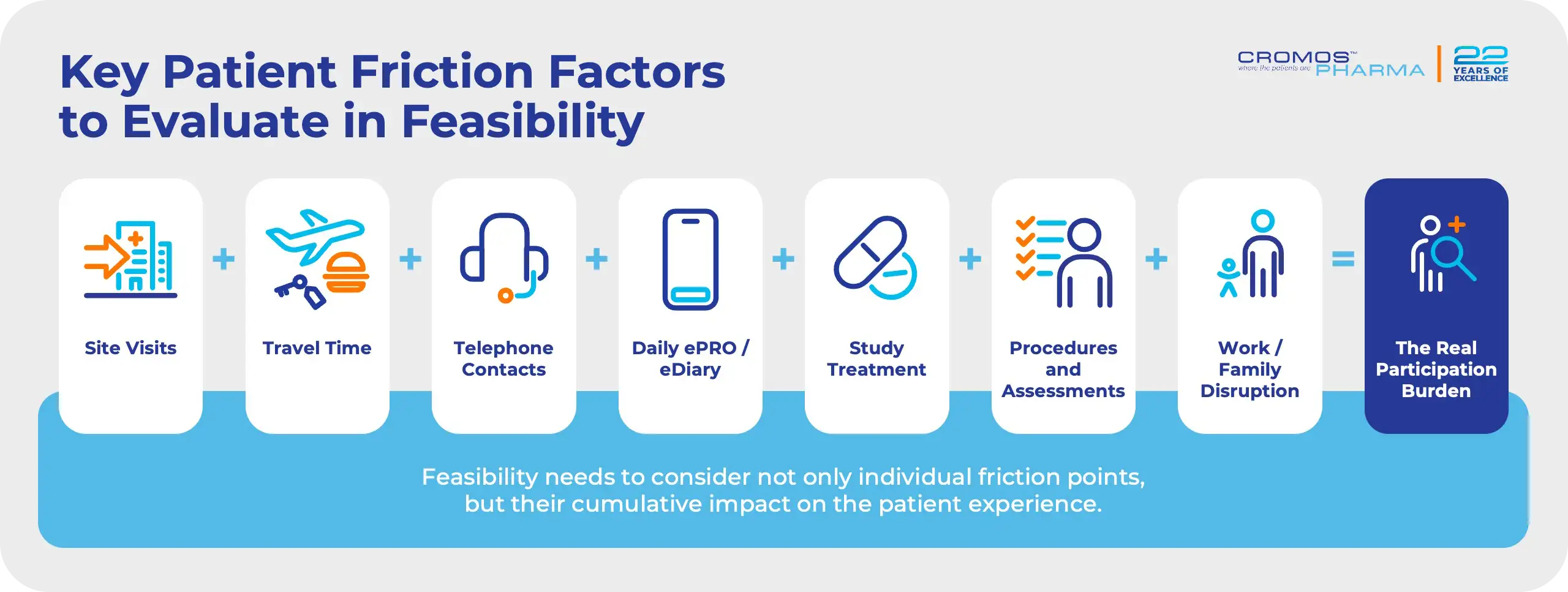
Weekly travel. Daily symptom reporting. Time away from work or family. Months of ongoing study commitments. Each individual requirement may appear reasonable when viewed in isolation. Together, they can have a meaningful impact on patients’ willingness to participate and their ability to remain in the study.
That is why one question deserves a much more prominent place in the feasibility assessment: Can the patient realistically live with the protocol?
Patient Availability Is Only the Beginning
A patient may be exactly who the study is looking for. They may appear in the site database and meet the eligibility criteria.
But they may still be difficult to recruit – and just as difficult to retain.
Between theoretical patient availability and actual enrollment lies a series of practical realities. The site still needs to reach the patient, confirm that they pass screening and determine whether participation is realistic. The patient, in turn, must be willing to undergo the required procedures, manage the visit schedule, complete study activities between visits and sustain that commitment for six months, twelve months or longer.
These patient friction points may not be visible in prevalence figures or eligibility criteria, but they can substantially narrow the pool of patients who can realistically participate.
That is why patient-centric feasibility adds another layer to the traditional assessment: understanding where friction may arise along the patient journey and how it could affect recruitment and retention.
Where Patient Burden Shows Up in Practice
Case 1: The “Perfect” Site That Patients Cannot Reach
Consider a study requiring weekly visits, laboratory assessments and in-clinic treatment.
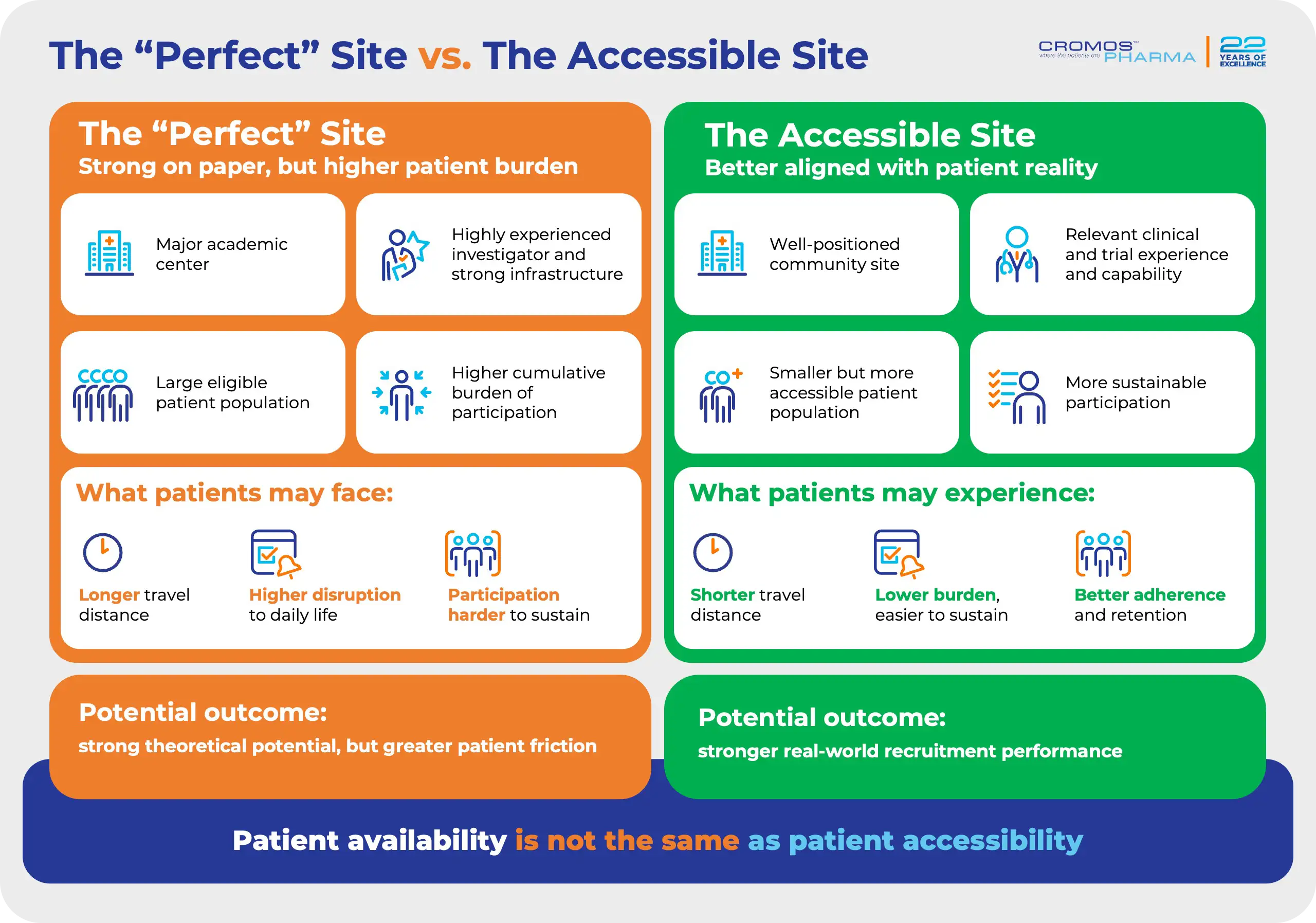
A major academic center may look ideal: highly experienced investigators, strong infrastructure and a large pool of potentially eligible patients.
But what if many of those patients live two hours away?
For someone living with a chronic or serious illness, a single study visit can mean several hours of travel, waiting and time away from work or family. If that happens every week, the practical reality of participation can look very different.
Meanwhile, a smaller community center may have a smaller patient pool but be closer to where those patients actually live. In practice, a more accessible center may outperform a more prestigious center that looks stronger on paper, simply because participation is easier for its patients.
Site potential is not just about how many patients a center can identify — it is about how realistically those patients can participate.
Case 2: When Decentralization Creates More Work
Consider a relatively short outpatient trial in a painful but non-life-threatening condition.
Treatment is topical and administered at home. At first glance, the protocol appears relatively patient-friendly.
But the primary assessment depends heavily on electronic patient-reported outcomes.
Participants are expected to document symptoms consistently, day after day. Suddenly, adherence to the digital component becomes central to the study.
For the patient, the question is no longer simply:
“Am I willing to try this treatment?”
It becomes:
“Am I willing to think about this study and report my symptoms every day for the next several weeks or months?”
That distinction matters.
Digital tools can reduce travel and make participation easier, but they can also shift part of the study burden into the patient’s home. This becomes particularly relevant in populations that may need additional support with wearable devices, ePROs or smartphone-based assessments.
That is why digital usability and support need to be considered early. Simple onboarding, clear training and appropriate patient or site support can be part of the recruitment and retention strategy rather than an operational afterthought.
Technology and decentralization can reduce burden — but only when they are designed and supported around the patient.
Case 3: A Protocol That Looks Manageable on Paper
The Schedule of Assessments may look manageable at first glance. But the number of visits tells only part of the story.
A visit can involve travel, waiting time, procedures, assessments, questionnaires and several hours away from work or family. And the demands of participation may continue between visits.
In one chronic pain study we evaluated recently, the early schedule required repeated clinic visits, with telephone contacts in between — effectively creating a study touchpoint every few days. Participants were also asked to record frequent disease-related events and associated pain scores electronically throughout treatment.
No single requirement may appear particularly burdensome in isolation. But together, they can create a very different experience for the patient.
For a patient who works full time, has caring responsibilities or travels a few hours to the study site, those demands can add up quickly.
Feasibility should therefore look beyond the number of visits and procedures and consider the total burden of participation — particularly during the most intensive periods of the study.
Sometimes the Patients Exist — Just Not Where You Expect Them to Be
Patient-centric feasibility goes beyond the burden of participation.
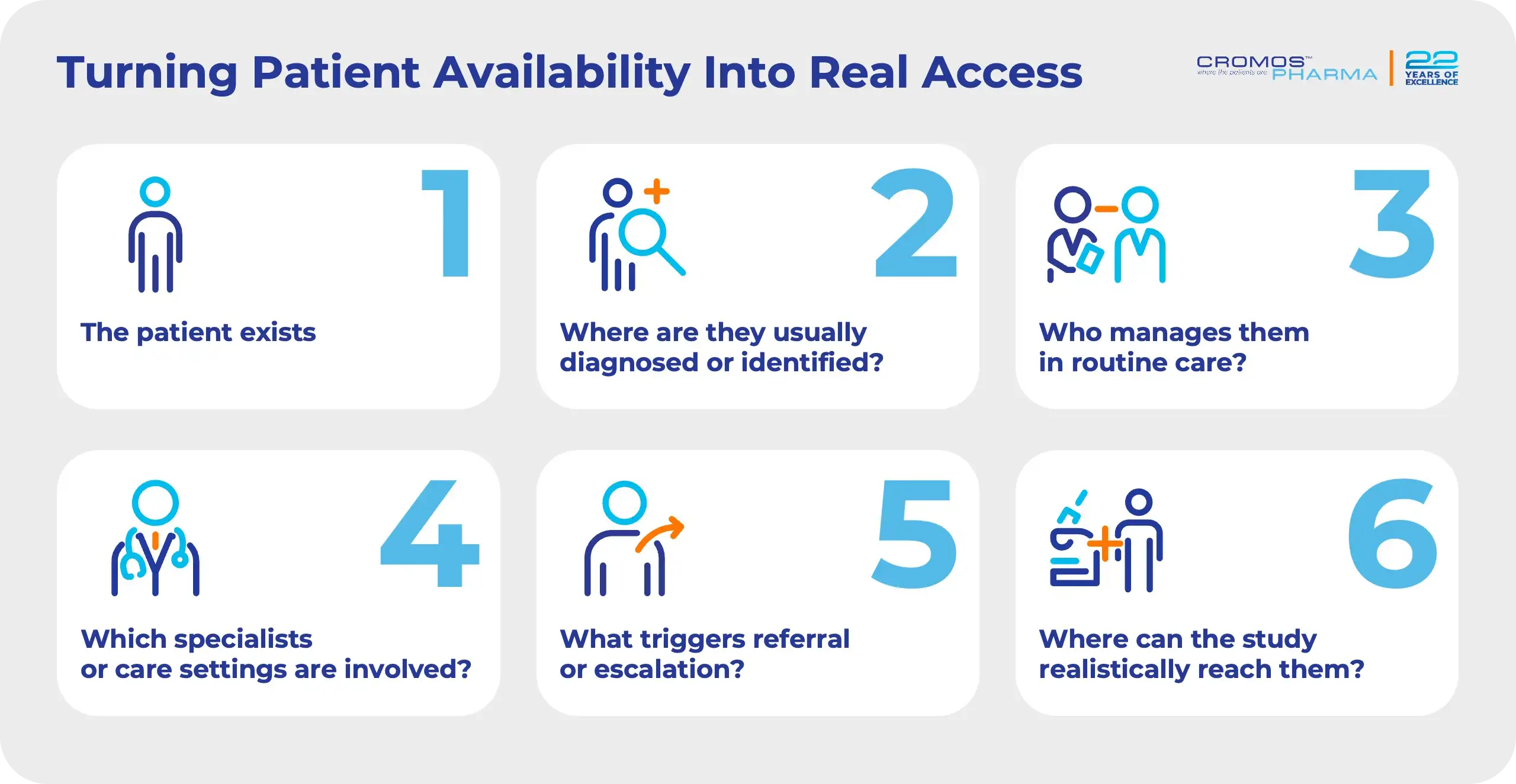
It is also about understanding the patient journey through routine care and identifying the points where trial access becomes realistic.
In one recent feasibility assessment, the study targeted a highly specific population of patients who had previously undergone major gastrointestinal surgery.
Looking only at which centers performed the highest volume of these procedures would not necessarily tell us where those patients are today.
Years after surgery, some patients remained under specialist gastroenterology care. Others continued with colorectal surgeons. Some returned to community physicians and came back to a tertiary center only if complications developed.
A center may therefore have treated hundreds of relevant patients historically — while routinely seeing only a fraction of them today.
That changes the question from:
“How many of these patients has the center treated?”
to:
“Where are those patients now, who follows them, and how would they reach this trial?”
That is where patient journey mapping becomes a practical feasibility tool. It helps move the assessment from where patients theoretically exist to where they can realistically be identified, referred and recruited — ultimately supporting better-informed site selection and more realistic recruitment assumptions.
How Cromos Pharma Brings Patient Reality Into Feasibility
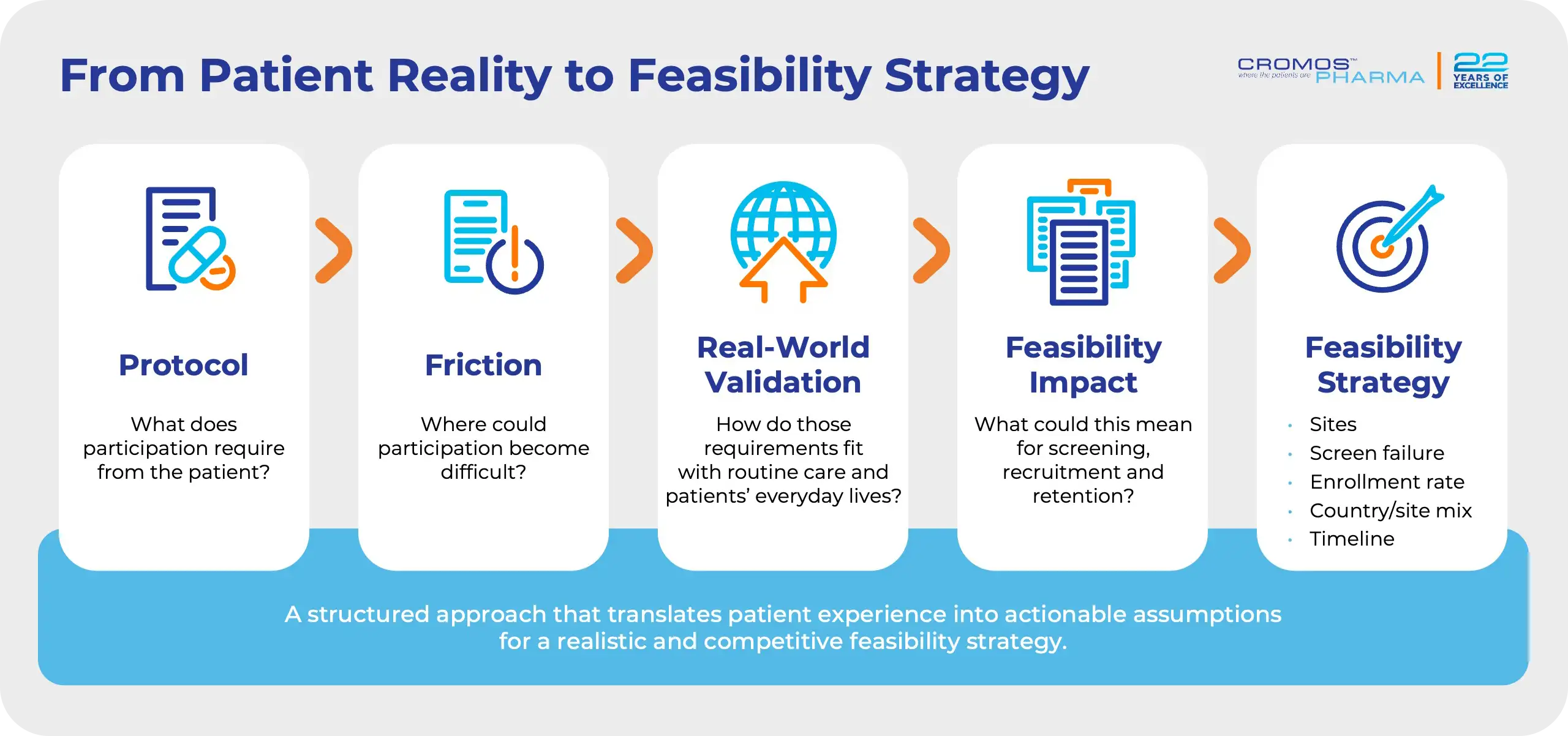
The goal of patient-centric feasibility is to identify the factors that can materially affect recruitment and retention, understand their likely impact and account for it in the feasibility strategy from the start.
At Cromos Pharma, this starts by looking at the protocol through two lenses:
First, whether enough protocol-eligible patients can be identified at the right sites and within the required timelines.
Second, what participation will actually require from those patients.
We review the Schedule of Assessments, screening requirements, treatment administration, digital assessments, invasive procedures, visit frequency, follow-up and other potential friction points.
We then assess how the protocol aligns with routine clinical practice and the realities of patient participation.
Experienced investigators can provide insight into the practical implications of protocol requirements for both patients and sites. Patient groups may highlight concerns that are not obvious from the protocol itself.
For populations with complex care pathways, patient journey mapping can show where patients are actually treated and followed — and which specialties or referral pathways may need to be part of the recruitment strategy.
The key is to translate these findings into practical feasibility decisions.
This is where patient-centric feasibility becomes actionable — influencing country and site selection, enrollment-rate assumptions, retention planning and the overall enrollment timeline.
Conclusion
Traditional feasibility fundamentals still matter. A study still needs to understand where the relevant patients are, which sites can identify and reach them, and how quickly enrollment can realistically progress.
But patient availability alone does not determine whether a study will recruit successfully. As the examples throughout this article show, the distance to the site, the intensity of the visit schedule, the demands of digital reporting, the procedures required and even the way patients move through routine care can all influence whether an eligible patient ultimately becomes an enrolled patient — and whether they remain in the study.
That brings feasibility back to two deceptively simple questions.
Where are the patients?
This remains the starting point. But answering it requires more than prevalence data, historical site performance or the number of patients listed in a database. It means understanding where patients are being treated today, who is following them, how they move through the healthcare system and which sites or referral pathways can realistically connect them with the study.
And then comes the question that is just as important:
What will it take for them to say yes — and to stay?
The answer lies in the practical experience of participation. Can patients reach the site often enough? Can they accommodate the procedures, assessments and time commitment? Can they manage what the protocol asks of them between visits? And can they sustain those demands for the duration of the study?
Patient-centric feasibility brings these two perspectives together. It connects the question of patient access with the reality of patient participation and translates both into practical decisions about country and site selection, recruitment assumptions, retention planning and enrollment timelines.
The value is in identifying those realities early, while there is still an opportunity to respond to them. A site that appears strong on paper may need a different recruitment strategy. A demanding visit schedule may require additional patient support. A decentralized component may reduce one form of burden while introducing another. And a patient population that appears concentrated at major centers may, in practice, be dispersed across different specialties and community settings.
When these factors are considered during feasibility rather than after recruitment begins, potential barriers become inputs to the strategy instead of problems to solve later.
Ultimately, stronger feasibility is not only about demonstrating that eligible patients exist. It is about understanding where they are, how they can be reached, and what participation will require of them once they are found.
A feasibility strategy that can answer both questions is far more likely to reflect how the study will work in practice.
The Cromos Pharma Perspective
At Cromos Pharma, we believe that successful clinical trials begin with a realistic understanding of the patients they aim to reach. Feasibility is not simply about identifying eligible populations, but about understanding the practical realities that influence recruitment, participation, and retention.
Our dedicated Feasibility and Therapeutic Strategy team focuses on translating these insights into practical study planning. By combining therapeutic expertise, patient journey insights, and real-world recruitment considerations, the team helps sponsors bridge the gap between protocol expectations and clinical practice.
Planning a clinical trial? Contact our team at inquiry@cromospharma.com to discuss how our experience can support your development program.